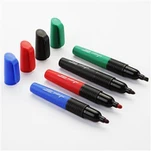
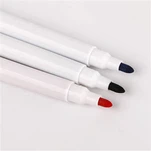
Whiteboard markers and dry erase markers are essentially the same type of writing tools, but their functional differences need to be distinguished in combination with specific product characteristics. The following is a detailed analysis:
1. Technical definition and core characteristics
Technology attribution
Both belong to the category of water-based markers. The ink is based on water-based solvents and is erasable by adding film-forming agents, pigments, and other ingredients. Its writing principle relies on the ink to form a peelable film on the surface of the whiteboard, rather than penetrating coloring.
Erasable mechanism
The core difference lies in the film-forming state of the ink after drying:
Conventional whiteboard pens: After the ink dries, it forms a semi-solid film, which needs to be peeled off by rubbing with a whiteboard eraser or soft cloth, and the residue is powdery.
Dry erase pen: By optimizing the film-forming agent formula, the ink forms a fragile, flaky film after drying, and the debris is easier to fall off when wiping, reducing secondary pollution.
2. Functional differences and usage scenarios
Writing experience comparison
Dry erase pen: The ink flow is better, and the glass bead design of the pen tip can prevent ink precipitation, which is suitable for high-frequency and continuous writing scenarios (such as teaching blackboard writing).
Whiteboard pen: Some models need to shake the pen body to activate the ink flow. The ink may be cut off during intermittent writing, but the writing ability can be restored after the pen tip is dipped in water.
Erasure efficiency and residue
Dry erase pen: The fragility design of the film increases the wiping efficiency by more than 30%, and the residual debris can fall off naturally, but trace amounts of polymer may remain on the board after long-term use.
Whiteboard pen: The board surface needs to be cleaned after regular wiping to avoid film accumulation; otherwise, permanent marks are easily formed.
Applicable scenarios
Dry erase pen: More suitable for scenarios where content needs to be frequently modified (such as brainstorming meetings and temporary markings).
Whiteboard pen: More advantageous in scenarios with low frequency of use or cost sensitivity.
3. Product classification and purchase recommendations
Structure type
Disposable whiteboard pen: Economical choice, but it is easy to cause resource waste.
Refillable whiteboard pen: ink can be added by twisting the device, which is more environmentally friendly.
Direct liquid whiteboard pen: large ink storage capacity, stable writing fluency.
Pneumatic whiteboard pen: built-in airbag device to achieve continuous ink supply, suitable for high-intensity use scenarios.
Purchase strategy
High-frequency use scenarios: dry erase pens or pneumatic whiteboard pens are preferred to reduce wiping time and maintenance costs.
Environmental protection needs: refillable whiteboard pens reduce consumables consumption by ink replenishment.
Budget-sensitive: Disposable whiteboard pens have more advantages in single-use costs, but the long-term total cost needs to be evaluated.