To remove permanent marker marks on a whiteboard, you can combine the following methods and flexibly choose according to the actual effect and whiteboard material:
1. Whiteboard pen/dry erase pen covering method
Principle: Use the solubility characteristics of similar inks to soften stubborn handwriting by covering.
Steps:
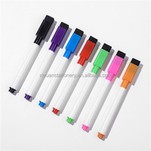
Use a whiteboard pen or dry erase pen to completely cover the marker marks, and wait for 5-10 seconds until the ink is half dry.
Quickly wipe with a soft cloth or paper towel, and use the solubility of the whiteboard pen ink to remove the marker marks.
Notes:
This method may cause the whiteboard pen used for covering to be scrapped, and the cost of consumables needs to be weighed.
Applicable to smooth whiteboard surfaces, the effect may be weakened on rough or worn board surfaces.
2. Alcohol wiping method
Principle: Alcohol dissolves the oily components in the marker and destroys the ink film structure.
Steps:
Dip a cotton swab or soft cloth in 75% medical alcohol and gently apply it to the handwriting for 30 seconds.
Wipe gently in one direction to avoid repeated friction that causes ink film fragments to remain.
Note:
If the alcohol concentration is too low (such as <50%), it may not be effective, and if it is too high, it may damage part of the whiteboard coating.
After wiping, clean it with clean water to prevent alcohol residue from corroding the board surface.
3. Alternative solvent method
Floral water/wind oil essence:
Contains alcohol and volatile organic compounds, which can partially dissolve the marker ink.
Operation: Spray the solvent on a soft cloth and rub it gently repeatedly until the mark fades.
Sunscreen:
Oil-containing ingredients can soften the marker ink, but subsequent cleaning is required.
Operation: Apply sunscreen to the handwriting, let it stand for 1-2 minutes, wipe it with a damp cloth, and then use kitchen detergent to remove the residual sunscreen.
Toothpaste:
Abrasives and surfactants work synergistically, suitable for small area marks.
Operation: Apply particle-free toothpaste to the handwriting, brush it lightly with a toothbrush after air drying, and wipe it clean with a damp cloth.
4. Professional Cleaner Method
Recommended Products:
Special Cleaner for Whiteboard: Contains organic solvents and surfactants; can penetrate deep into the ink film.
Hand-free Alcohol Gel: Contains a high concentration of alcohol, is portable, and evaporates quickly.
Operation Steps:
Spray the cleaner on the handwriting and let it stand for 1-2 minutes until the ink film softens.
Wipe vertically with a nano sponge or soft cloth, and gently scrape stubborn areas with a plastic scraper.
Rinse with clean water and let dry naturally.
5. Physical Assistance Method
Eraser:
Suitable for a small amount of light-colored marks on a smooth whiteboard.
Operation: Use a soft eraser to gently wipe vertically to avoid lateral friction that causes the ink to spread.
Hot Air Softening Method:
Suitable for scenes with thicker ink accumulation.
Operation: Use a hot air gun (hair dryer high temperature mode) to heat 10cm away from the board for 10-15 seconds, and wipe it immediately with a damp cloth.
Precautions
Material Compatibility:
Enamel/Metal Whiteboard: Can withstand alcohol and detergents, but avoid scratches from metal tools.
PET/PVC film whiteboard: Use hard tools with caution; a nano sponge + cleaner is recommended.
Glass whiteboard: Use alcohol or glass cleaner first to avoid scratches.
Safe operation:
Flammable items such as alcohol and wind oil should be kept away from fire sources and used in a ventilated environment.
Wear gloves during operation to prevent skin contact with irritating solvents.
Preventive maintenance:
Clean in time after daily use to avoid ink stains staying for a long time.
Regularly use professional cleaners for deep maintenance to extend the life of the whiteboard.