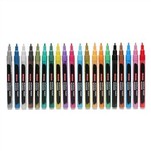
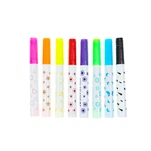
The liquid chalk marker is a writing tool that combines the characteristics of traditional chalk and a marker. Its core use focuses on writing on smooth media on non-porous surfaces. It has the advantages of easy erasability, bright colors, environmental protection, and safety. The following is an explanation of the application scenarios, core functions, technical characteristics, and comparative analysis:
I. Core application scenarios
1. Education and training fields
Applicable scenarios:
School blackboard/whiteboard: Replace traditional chalk to solve the problem of dust pollution, especially suitable for teachers and students with asthma or allergies.
Training classroom/conference whiteboard: support fast writing, modification, and content preservation (with erasable whiteboard film) to improve teaching efficiency.
Typical case:
Kindergartens use colored liquid chalk for interactive teaching to prevent children from accidentally ingesting dust.
University laboratories write experimental steps on glass boards, which can be easily erased with alcohol without leaving marks.
2. Commercial display and logo
Applicable scenarios:
Store window advertising: write promotional information on glass and acrylic boards with higher color saturation than ordinary chalk to attract customers' attention.
On-site guidance for events: temporarily mark routes or rules on mirrors and metal plates, and quickly clean up after the event.
Typical cases:
Coffee shops use golden liquid chalk to draw daily special drink menus on glass doors and wipe and update them with a damp cloth at night.
Music festivals write stage information on metal signs to avoid residual glue marks left by traditional tapes.
3. Art creation and DIY
Applicable scenarios:
Blackboard painting/wall painting: Create on customized blackboard walls and decorative glass, support gradient, overlay, and other effects, and it's easier to control brushstrokes than ordinary chalk.
Handmade gift customization: Write blessings on ceramics and smooth stones, and form a waterproof coating after drying (special curable liquid chalk is required).
Typical cases:
Write the names of guests on glass bottles with silver liquid chalk at the wedding as personalized table cards.
Home bloggers write inspirational quotes on retro mirrors and create an atmosphere with decorative paintings.
4. Industrial and professional fields
Applicable scenarios:
Factory equipment marking: Mark operating parameters on the surface of metal equipment, which is water-resistant and can be updated regularly.
Medical marking: Writing precautions on the glass partition of the dust-free workshop meets the requirements of a clean environment.
Typical cases:
Auto repair shops mark fault codes on glass observation windows and quickly remove them with detergent after inspection.
Laboratories mark solution components on the surface of glassware to avoid the risk of chemical corrosion of traditional oil-based pens.
2. Technical characteristics and advantages
Characteristics Description Advantageous scenarios
Dust-free writing The ink contains water-based or alcohol-soluble resins, which form a smooth coating after drying without dust dispersion. Schools, hospitals, dust-free workshops, and other sensitive environments.
Easy to erase Ordinary whiteboard surface: Directly erase with a wet cloth/whiteboard eraser; Glass/metal surface: Alcohol or detergent is required. Commercial displays that require frequent content updates.
Highly saturated colors The ink contains high concentrations of pigments and supports special effects such as fluorescent colors and metallic colors. Window advertising, artistic creation.
Waterproof and anti-fouling (optional) Some models of ink form a waterproof film after drying, which requires special detergents or special solvents (such as acetone) to erase. Outdoor markings, long-term display.
Diversity of pen strokes The pen tip specifications are optional (1-15mm), supporting effects such as fine line outlining and bold filling. Fine drawing and large-area writing.
3. Comparison with traditional writing tools
Comparison dimensions Liquid chalk Traditional chalk oil-based markers
Applicable surfaces Smooth media such as glass, metal, whiteboards, acrylic, etc. Porous blackboard, rough wall Paper, plastic, and some smooth surfaces (easy to penetrate)
Environmental protection Water-based ink is non-toxic; some are certified by EN71-3. Dust pollution, some of which contains lime to irritate the respiratory tract Contains organic solvents; may release VOCs.
Cleaning difficulty Can be wiped with a wet cloth/alcohol (except waterproof) Need to wash with water or special detergent; easy to leave traces. Need strong solvents such as acetone, which may corrode the surface.
Color performance High saturation, support fluorescent/metallic colors Single color, easy to fade Rich colors, but some surfaces are easy to see through.
Durability Short-term display (several hours to several days) Long-term retention (needs to be moisture-proof) Permanent (waterproof type requires special solvent to remove)
4. Purchase and use suggestions
1. Purchase points
Ink type:
Water-based: easy to erase, suitable for temporary writing (such as teaching, meetings)
Alcohol soluble: fast drying, moderate water resistance (such as glass window advertising).
Acrylic: waterproof and stain-resistant, requires special cleaning agents (such as outdoor signs).
Nib specifications:
Fine nib (1-3mm): suitable for outlining and marking.
Thick nib (6-15mm): suitable for large area filling and title writing.
Safety certification:
Products certified by ASTM D-4236 (USA) or EN71-3 (EU) are preferred to avoid excessive heavy metals.
2. Usage tips
Pre-treat the surface:
Before writing on a smooth surface (such as glass), clean and wipe dry with alcohol to prevent ink from penetrating into the micropores.
Drying time:
After writing, let it stand for 3-5 minutes to dry completely to prevent smudges when wiping.
Cleaning method:
Ordinary whiteboard: wipe directly with a damp cloth or whiteboard eraser.
Glass/metal: Wipe with alcohol cotton pads or special cleaners.
Waterproof coating: requires acetone or professional cleaners (such as Goo Gone).
3. Precautions
Avoid misuse of surfaces:
Do not use on porous media such as paper and uncoated wood; otherwise, the ink will penetrate and be difficult to remove.
Safety for children:
Choose a washable formula. If it accidentally touches the skin, it can be washed with soapy water.
Storage conditions:
Store it with the nib facing down to avoid the ink from drying up; keep it away from high temperatures to prevent the ink from expanding and leaking.
Summary
The core value of liquid chalk is to balance writing performance and cleaning convenience. Its applicability depends on the type of media and usage requirements:
Short-term, frequent updates: water-based ink + ordinary whiteboard is preferred.
Outdoor, long-term display: choose alcohol-soluble/acrylic waterproof ink.
Art creation: pay attention to the nib specifications and color saturation.
Sensitive environment: dust-free formula that needs to pass safety certification.
The correct selection of tools and usage methods can significantly improve writing efficiency and visual effects while reducing maintenance costs.