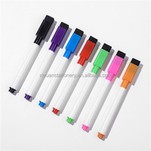
In recent years, with the rapid development of cross-border e-commerce, more and more imported stationery appear in our shopping carts. There will be differences in standards or technical specifications for stationery in terms of quality, safety, health, environmental protection, sign, etc. among countries, which may lead to that some goods meeting the requirements of relevant standards or technical specifications of the country of origin, but may not meet the standards of China.
Today, we will compare some differences between Chinese and foreign stationery standards from the perspective of stationery quality and safety risks.
Phthalate plasticizer in rubber
Among the imported stationery, Japanese stationery has captured the hearts of a lot of stationers by virtue of its exquisite appearance. Its humanized design and continuous innovation give consumers a better experience.
First, let's compare the differences between the Japanese stationery standard JIS S 6050:2002 Plastic Eraser and the industrial standard QB/T 2309-2020 Eraser implemented this year in China. The Japanese standard lacks restrictions on phthalates.
In order to make the product more soft, plastic rubber will add plasticizer in the product, and phthalate is a commonly used plasticizer in plastic products. Phthalates have mutagenic, carcinogenic, reproductive toxicity and other hazards. Long term exposure of young people and children may lead to endocrine disorders and harm the reproductive system. In recent years, it has been detected that phthalates are added to some rubbers as plasticizers. After the revision of the Eraser (QB/T 2309-2020), the limitation of six harmful phthalates such as di (2-ethyl) hexyl phthalate has been added, but the Japanese standard has not been updated.
Kindly reminder:
When purchasing rubber, pay attention to the product label, give priority to the rubber marked with "environmental protection", "no plasticizer" and other instructions, and be careful with the rubber with cute shape and fragrance as the selling point.
Harmful organic substances in glue
The application of new materials and technologies not only makes stationery products on the market more beautiful and refined, but also brings some new quality risks. For example, glue, from traditional liquid glue and solid glue to flash glue, spot glue, color change glue and quick drying glue in the market today, has a variety of properties and shapes, and a more diversified product category.
Compared with the standard of stationery glue, the Japanese JIS S 6023:1992 Glue and the Chinese industry standard QB/T 1961-2011 Office Glue have only one restriction on harmful substances: free formaldehyde, benzene, toluene+xylene, total volatile substances and acrylamide, GB 21027 2020 added the restriction of acrylamide in liquid gel.
Formaldehyde, benzene and acrylamide in glue will exist in the form of adhesives, preservatives, solvents and residual monomers, but these substances are volatile toxic substances, which will cause harm to human body when inhaled beyond a certain concentration.
Kindly reminder:
At present, PVA/PVAL (polyvinyl alcohol or its modifier), PVP (polyvinylpyrrolidone) and other environment-friendly water-based adhesives are commonly used in stationery glue on the market. When choosing glue, consumers should pay attention to whether the main ingredients of glue are marked on the label, and try to choose the glue with environment-friendly materials.