Key requirements for permanent marking of plastics include strong ink adhesion, water resistance and colour resistance, and compatibility with smooth/non-absorbent plastic surfaces. There are three main categories: ``oil base permanent marking '', ``industrial grade marking"and ``paint brush ''. You can choose the appropriate marking machine according to your specific needs:
I. Key Recommendations: defining the objectives of the scenario
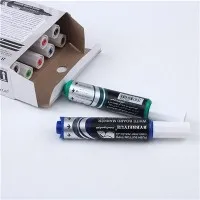
1.Oil-Based Permanent Markers (Everyday Use)
This is the most common and cost-effective option. Its oily ink can be firmly attached to plastic surface, with waterproof, abrasion resistance, fade resistance and other features. Suitable for most household plastics (e.g. PP, PE, ABS, plastic containers, toys, etc.).
Key features: Fastdrying, low odour (optional model), variety of colours (black, red, blue, colour). Available in fine nibs nibs (0.5-1mm for marking) and thick nibs (2-5mm for marking large areas), this is ideal for everyday use. Representative Products:
Sharpie Permanent Markers (fine markings, extra markings and Brush Tip): Ink leaves permanent markings on multiple surfaces, including plastic, metal and glass. Fast drying, anti-aging, AP certified, safe and non-toxic, suitable for home, office and crafts.
Japan Flag 700 Oil-Based Marker: 0.7mm wide, quick-drying, waterproof, lightweight, compliant with EU RoHS standards, free of xylene, perfect for precise marking of plastic parts and containers.
Chafford 190 Press-On Oil-Based Marker: Imprint design (no lid), low odor mimeo ink, 5-10 seconds of drying, waterproof and moisture-resistant. Suitable for everyday materials such as plastics and metals, it is commonly used as marking equipment.
2.Industrial-Grade Permanent Markers (subject to good environmental performance)
If plastic is exposed to extreme conditions such as high temperature, chemical exposure (such as solvent wiping) and outdoor exposure (such as industrial plastic parts or outdoor plastic equipment), industrial-grade labels should be chosen because ink formula are more durable. Main features: high temperature resistance (approx. 400-500° C /200-260° C), solvent resistance (ethanol, acetone, etc.), excellent weather resistance. Markings were virtually indelible, mostly black (commonly used in industry).
Representative Products:
Sharpie Industrial Markers: Designed for industrial/laboratory applications, ink is heat and steam resistant and marks hard surfaces such as plastic, metal and glass to prevent stains and discoloration.
Etching Industrial Markers: solvent resistant ink such as ethanol, isopropyl alcohol, acetone, temperature resistance, water resistance, wear resistance, good weather resistance, in accordance with ISO11540 standards. Suitable for industrial plastic parts and chemical plastic containers.
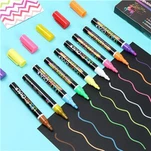
3.Paint Pens (High Adhesion + Decorative Needs)
Ink contains pigment particles with pigment-like texture. Once formed, it has excellent adhesion and is suitable for rough plastic surfaces, applications that require colour trim or thick labels (such as plastic crafts, models and outdoor plastic signs). Key features: thick ink, rich colours (including metal and fluorescence), waterproof, scratch-resistant, shiny and fade to mask slight scratches, some for plastic doodling and personalisation.
Representative Products:
Uni Posca Opaque Paint Pens (imported from Japan): Suitable for plastics, metals, glass, etc. The opaque ink is colourful, waterproof and scratch-resistant, perfect for plastic models and handmade accessories.
Flag SUPREME Metallic Paint Pens: Contains gold and silver pigment particles with rich metallic luster, fastdrying and strong adhesion. Perfect for personalizing decorative plastic crafts and accessories (gold, silver, metallic blue).
ii. Tips for Key Purchases and Use (to Prevent Marks from Falling Off)
Check product labeling: It's best to specify "plastic," "permanent," "oily" or "waterproof" on packaging. Avoid water-based markers (which may not adhere to plastic). Plastic surface pretreatment: If the plastic surface is greasy or dusty, dry it with alcohol. This will greatly improve the adhesion of ink (especially smooth plastics like PP and PE).
Test compatibility: Some special plastics,such as Teflon and polypropylene, have smooth surfaces, so regular labels may not stick. It is recommended to mark hidden areas on the plastic surface and leave it to sit for 24 hours to test how easily it can be erased.
Wait until completely dry: Avoid direct contact with surfaces after writing. It takes 5-10 seconds for oily markers to dry quickly and 1-2 hours for oily markers to fully solidify. Cured marks last longer. III. In a word: choose the right logo for your needs.
Use Scenario Recommended Type Core Advantages
Permanent oil-based marking of everyday plastics (containers, components): cost-effective, quick to dry and versatile
Industrial/Extreme Environments (High Temperature, Solvents) Industrial-Grade Permanent Markers: weather-and solvent-resistant, excellent adhesion
Plastic Handicrafts/Decorations (Models, Crafts) Paint Pens: Vibrant colors, clearly marked, highly decorative
Note: "Forever" is a relative term. Marks may fade due to prolonged exposure to sunlight, frequent friction, or friction with strong solvents such as banana oil. It is recommended to select products that are weather-/solvent-resistant according to the expected use environment.

What Markers Can Permanently Mark Plastic?
Dec 15, 2025




Send Inquiry
Latest News