Markers and brushes differ greatly in design principles, nib structure, ink/pigment composition, usage scenarios, and effects. Here's a detailed comparison:
I. Core Design Differences
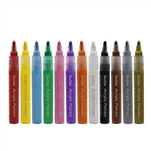
Markers
Design goals: Used for quick marking, highlighting, or improvisation, emphasizing convenience, quick-drying, and durability.
Nib Structure: Mostly fiber nibs (such as felt or nylon nibs) with uniform ink flow and controlled line thickness (some double-tip markers have two nib thicknesses).
Ink Composition:
Water-based Markers: Use water as a solvent and contain pigments or dyes that are brightly colored but fade easily.
Oil-based Markers: Solvent oil (such as benzene), contains pigment, is waterproof and stain resistant, and has high durability.
Alcohol-based Markers: Alcohol based solvent, quick drying, no odor, suitable for smooth surfaces (e.g. glass, metal, etc.).
Paintbrushes
Design goals: Professional painting that focuses on expression of color, brushstroke layering, and adhesion of paint.
Nib Structure: Made from animal hair (such as bristles or wolf hair) or synthetic fibres, the nib is soft and flexible, allowing for rich strokes through extrusion and rotation techniques.
Pigment Composition: Based on an oily medium such as linseed oil or walnut oil, mineral or plant pigments are added to form a stable, durable film when dried. ii. Comparison of use of programmes and effectiveness
Dimensions: Marker vs. Oil Paintbrush
Suitable Surfaces: Paper, fabric, plastic, glass, metal, etc. (selected according to ink type) Canvas (linen, cotton), wood, thick cardstock, etc. (require to be precoated to enhance adhesion)
Line Characteristics: even lines, clear edges, suitable for painting or filling color blocks. Varied brushstrokes (thick and thin, damp and dark) that express texture, light and shadow, stereo.
Color Performance: Vibrant colors but with fewer layers and medium coverage (oil markers can cover some of the base colours). Thick colors and rich layers create complex effects through layering and scraping.
Drying Time: Water-based/alcohol-based markers: seconds to minutes; oil-based markers: days and hours (depending on surface) -days and weeks (depending on paint thickness, ambient temperature and humidity)
Modification Methods: Water-based markers: Wiped with a damp cloth; oil-based markers /alcohol-based markers: Special solvents (e.g. alcohol) are required. After drying, cover the modifications with a spatula, sandpaper or paint. Adjust with a brush directly while remaining moist.
III. Typical Application Scenarios
Marking
Quick Marking: Marking information (e.g., model, date) on documents and product surfaces.
Temporary Creations: Journal decoration, whiteboard writing, poster design (typed paper required).
Industrial use: modification of building drawings, product classification (e.g., labelling of qualified and defective products in different colours).
Children's Activities: safe and non-toxic water-based marking for painting or crafts.
Oil Paintbrushes
Professional painting: Oil painting, classical realism, abstract expressionism, etc.
Artistic Decoration: murals, furniture painting, ceramics (special paint required).
Teaching Demonstration: Demonstrating skills such as craftsmanship and color mixing in art class.
Fix: Fill in missing pieces during the restoration of the artifact (matching the original paint and technology is required).
IV. INTRODUCTION Selection Recommendations
Marks → Choose markers (water-based/oil-based/alcohol-based based on surface material).
For subtle colors and strokes: Choose a paintbrush (for oil paints and canvas).
For children or temporary use: Prioritize water-based markers (easy to clean and safe).
Specialise in making or storing: Choose a paintbrush (pay attention to paint drying time and storage conditions).
V. Clarifying Common Misconceptions
Can markers replace paintbrushes?
No. The dura formed by drying Marker ink cannot be corrected by layering or scraping; oil paints can be adjusted multiple times for deep painting.
Can paint brushes be used with marker paints?
Not recommended. Marker ink and oil paint components are incompatible and can lead to adhesions, discoloration or cracking.
Are brushes suitable for painting on canvas?
For temporary use (such as sketching), but for long-term preservation, use oil paints or acrylics; otherwise, it is likely to fade or peel.

What's The Difference Between Markers And Paintbrushes?
Jan 01, 2026


Send Inquiry
Latest News